December 23, 2025
6
min read

Dec 23, 2025
“Events and emotions from the past have shaped what clients think, feel, and believe about money. This, in turn, affects their financial behavior and choices in the present.” – Dr. Brad Klontz, financial psychologist
Most investors want “better discipline” with money. Very few want to talk about why they behave the way they do. Yet that “why” often started decades ago: a parent who stressed every bill, a layoff that came out of nowhere, growing up where nobody trusted the stock market. Those early stories often turn into invisible rules. If you’ve been frustrated with your financial habits in 2025, instead of asking “What’s wrong with me?”, ask “Where did I learn to think about money this way?” You’re not just managing assets; you’re slowly editing a story that started long before your first brokerage account.
1. 🌍 Central banks deliver the largest rate-cutting push since 2008
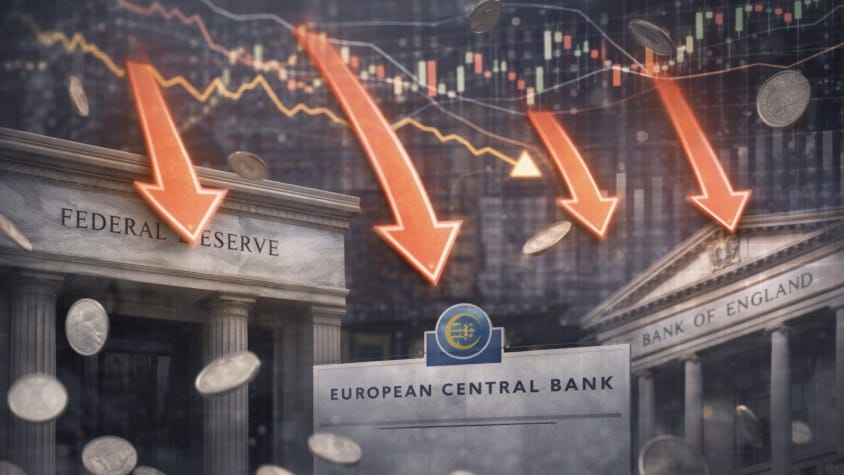
Major central banks have cut interest rates 32 times in 2025, totaling 850 basis points of easing — the biggest wave of cuts since the 2008–09 crisis. The Fed, ECB, Bank of England and peers across Canada, Australia, Sweden, Norway, and Switzerland all shifted from fighting inflation to cushioning slower growth, while Japan was the lone outlier, hiking twice. Emerging markets went even further, with central banks in Turkey, Mexico, Russia and India delivering over 3,000 basis points of cuts combined.
Why it matters: Interest rates are the “gravity” of markets — when they fall, risk assets generally float higher and borrowing gets cheaper, but future returns can shrink.
Assets in Focus: Equities
2. 📈 US economy grows 4.3% in Q3 as consumers keep spending

A long-delayed report shows US real GDP grew at a 4.3% annualized rate in Q3 2025, the fastest in two years. Strong consumer spending on cars and services, plus higher government outlays and a drop in imports did much of the work. But the report also flags headwinds: a 43-day government shutdown is expected to shave 1–2 percentage points off Q4 growth, and higher living costs and tariffs are squeezing lower- and middle-income households more than wealthier ones.
Why it matters: Strong GDP supports earnings and jobs in the near term, but the “K-shaped” pattern — wealthier households doing fine while others feel squeezed — can make the economy more fragile than the headline number suggests.
Assets in Focus: Equities
3. ⚖️ Companies sell tariff-refund rights for pennies on the dollar

Some US importers hit by President Trump’s emergency tariffs are quietly selling their rights to possible future tariff refunds to hedge funds and special-situations investors. Toy maker Kids2, for example, sold claims on past tariff payments for about 23 cents on the dollar in a deal brokered by Jefferies, giving the company $2 million in cash today instead of waiting years for a potential Supreme Court ruling. Trade and tax advisers estimate businesses could collectively be owed tens to hundreds of billions of dollars if the Court ultimately rules parts of the tariff regime unlawful.
Why it matters: Policy risk can quietly reshape cash flows — import-heavy retailers, manufacturers, autos, and industrials are most exposed to tariff swings.
Assets in Focus: Equities, Fixed Income
4. 🔌 Copper surges past $12,000/ton on AI and energy-transition demand

Copper prices have surged to record highs above $12,000 per ton, capping a roughly 35–40% gain in 2025, driven by strong demand and tight supply. Traders are rushing shipments into the US ahead of potential new tariffs, while China is signaling more fiscal support and long-term investment in power grids, EVs, and data centers — all heavy copper users. Analysts now talk about a structural deficit into 2026 and beyond.
Why it matters: Copper is called “Dr. Copper” because it tends to sniff out economic and industrial trends early. AI data centers, EVs, and renewables all compete for the same metal — a structural bottleneck with inflation implications.
Assets in Focus: Commodities
5. 💊 European stocks near records as Novo’s Wegovy pill lifts healthcare

Europe’s STOXX 600 index briefly hit a record high, helped by a strong rally in healthcare after US regulators approved a daily pill version of Wegovy, Novo Nordisk’s blockbuster weight-loss drug. Novo Nordisk shares jumped around 7–8%, giving Novo an edge over Eli Lilly in the race to dominate the obesity-drug market.
Why it matters: GLP-1 drugs like Wegovy are no longer just a healthcare story — they touch consumer spending, food & beverage, airlines, and even insurance. Single breakthrough products can move entire indices when the company is large enough.
Assets in Focus: Equities
🌀 Diversification Score — Calculate my score
🤯 Alternative Investment Highlight: 🎲 Prediction Markets — Investing or Just Fancy Betting?

In 2025, you can now “invest” in whether the next jobs report comes in hot or the S&P 500 hits a certain level via prediction markets run by FanDuel, DraftKings, Robinhood, and CME Group. Monthly trading has exploded from under $100 million in early 2024 to over $13 billion by late 2025. At a party, “I’ve got a position on next month’s CPI print” sounds smarter than “I bet on the game,” but economically they’re cousins — short-term binary risk on events you mostly can’t control, often with casino-like design. Just because something is wrapped in charts and a brokerage-style app doesn’t mean it’s a long-term investment.
🧠 From the Education Center: A Complete Guide to Real Estate Investing with a Self-Directed IRA
This guide explains how real estate investing works within an SDIRA, the custodian’s role, how income is taxed, and the compliance pitfalls to avoid.
🚨 Your $10,000 question, answered
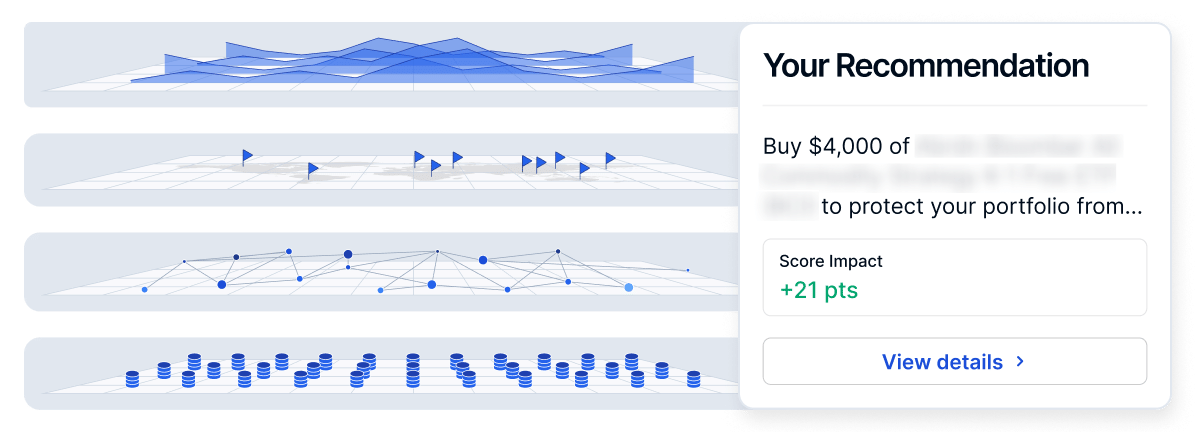
Put your money to work → PortfolioPilot.com


©2025 diversification.com. IMPORTANT DISCLOSURES: diversification.com is a technology product of Global Predictions Inc, a Registered Investment Advisor with the SEC. For informational and educational purposes only. Not financial advice. Past performance is not a guarantee of future results. Investing involves risk. DATA SOURCES: StockNewsAPI, Morningstar, AlphaVantage, IEX, TradingEconomics. REGULATORY: portfoliopilot.com/disclosures.